

- Projects
- Insights
-
Careers

Careers
Ranked a Top Workplace and ENR Top 500 Design Firm, Burns offers opportunities to inspire, create and deliver transformational projects that last generations.
- News + Events
-
About

About
Burns inspires, creates and delivers specialized-engineering solutions for mission-critical facilities.
- Offices

-
What We Do
Discipline
Expertise
Industry-Specific - Projects
- Insights
- Careers
- News + Events
- About
- Offices

 Contact Us

"*" indicates required fields
Southern California Regional Rail Authority, Wireless Crossing Nearside Station Stop

Burns provided wayside systems engineering design and technical support to help the Southern California Regional Rail Authority (SCRRA) develop and deploy Wabtec’s Wireless Crossing Nearside Station Stop (WCNSS) technology to help relieve traffic congestion at grade crossings that are located near Metrolink stations.
Implemented on the Redlands Passenger Rail Project along the San Gabriel Subdivision, the system works with Metrolink’s existing Positive Train Control network to keep downstream crossing gates idle while trains approach or stop at stations and activate them only as trains depart. This approach reduces unnecessary gate-down time, minimizes disruptions for vehicle and pedestrian traffic, extends crossing-equipment life, and improves clarity and safety at crossings near stations.
Burns worked with SCRRA, Wabtec, and other stakeholders to advance the WCNSS operational concept and establish the standard wayside-system parameters and design criteria required for deployment. Our team researched vendor requirements and field parameters; prepared wayside-system design plans for the SCRRA signal and communications laboratory and the field test site; conducted field-site system simulations; modified application programs for system testing; developed Federal Railroad Administration test requests and test cases for laboratory and field testing; and performed laboratory and in-service testing.
Originally developed for seven crossings on Metrolink’s nine-mile Arrow service between San Bernardino and Redlands, WCNSS was subsequently considered for active crossings across the Metrolink system. SCRRA identified 52 crossings for WCNSS upgrades.
Location
California
Client
Southern California Regional Rail Authority
Industry
Expertise
Learn more about our Railroad + Transit practice
Railroad + Transit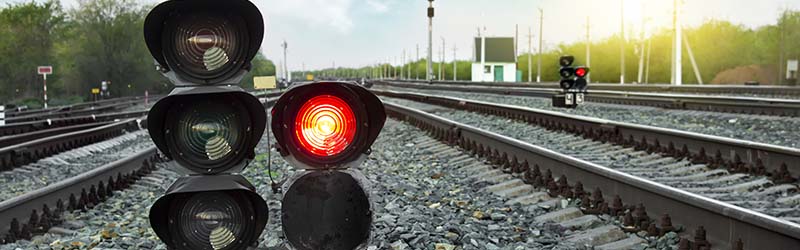
Key Team Members





