

- Projects
- Insights
-
Careers

Careers
Ranked a Top Workplace and ENR Top 500 Design Firm, Burns offers opportunities to inspire, create and deliver transformational projects that last generations.
- News + Events
-
About

About
Burns inspires, creates and delivers specialized-engineering solutions for mission-critical facilities.
- Offices

-
What We Do
Discipline
Expertise
Industry-Specific - Projects
- Insights
- Careers
- News + Events
- About
- Offices

 Contact Us

"*" indicates required fields
Susquehanna Area Regional Airport Authority, Harrisburg International Airport Taxiway A Rehabilitation

Burns, as a subconsultant to Mead & Hunt, supported drainage design, stormwater management, and permitting for the rehabilitation of Taxiway A at Harrisburg International Airport (HIA), owned and operated by the Susquehanna Area Regional Airport Authority (SARAA), to address pavement deficiencies, improve airfield safety, and achieve compliance with current FAA design standards.
The project was initiated based on pavement condition assessments identifying widespread deficiencies and low Pavement Condition Index (PCI) values below acceptable thresholds. Structural distress in both asphalt and concrete sections necessitated rehabilitation to restore reliability and safety. The project also addressed geometric and grading non-compliances, including fillet geometry and surface drainage, to meet FAA standards
Taxiway A extends from the Runway 13 hold line through multiple taxiway intersections to the Runway 31 hold line, requiring pavement rehabilitation including removal of existing asphalt (AC) and concrete (PCC) pavements, milling, and reconstruction of a 75-foot-wide taxiway section to meet FAA Taxiway Design Group (TDG 5) requirements. This also includes 30-foot-wide paved shoulders to replace existing turf shoulders.
Burns evaluated drainage infrastructure to identify deficiencies in capacity, grading, and conveyance, including ponding between Taxiway A and the adjacent runway. Hydrologic and hydraulic analyses assessed existing and proposed runoff conditions, peak flow rates, and system performance. Improvements were designed in accordance with FAA AC 150/5320-5D and included conveyance upgrades, inlet modifications, storm drain extensions, proposed inlets and culverts adjacent to a proposed service road, and a pavement edge underdrain system to intercept groundwater and protect pavement performance.
A key focus of the project was the rehabilitation of a documented airfield “Hot Spot” at the Taxiway A/D/G intersection, where non-standard geometry increased operational complexity and pilot confusion. Through coordinated grading and geometric refinements, surface conditions were improved while maintaining acceptable longitudinal grades and minimizing impacts to adjacent taxiways. Integrated drainage improvements including inlet relocation, structure modifications, and underdrain coordination were essential to eliminating ponding and supporting the revised grading strategy.
Burns developed the Post-Construction Stormwater Management (PCSM) approach and supported NPDES permitting through coordination with PA DEP and the Dauphin County Conservation District (DCCD), addressing approximately 13 acres of new impervious area while demonstrating negligible peak flow impacts.
Due to shallow groundwater and urban fill, traditional infiltration and detention BMPs were not feasible. An alternative compliance strategy was developed to utilize conveyance improvements, vegetated filter strips, and operational measures including routine airfield sweeping to meet water quality requirements without introducing wildlife attractants or ponding.
Burns’ contributions supported a critical airfield rehabilitation effort addressing pavement deficiencies, correcting geometric non-compliances, and implementing a compliant stormwater management strategy to enhance long-term safety, regulatory compliance, and lifecycle performance of Taxiway A.
Learn more about our civil practice.
Civil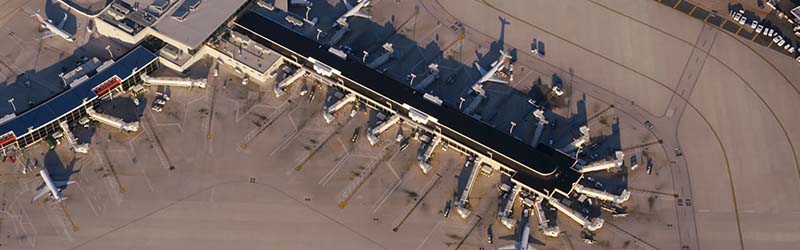
Key Team Member





